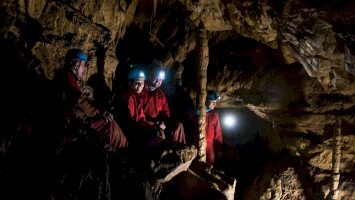
Hello everyone, we had our first exciting trip off-road near the small village Perkupa!

Carlotta's perspective incoming
Roland (works for the Bükki Nemzeti Park) took us with him to a bird ringing camp in the Aggteleki Nemzeti Park, where he goes every year since he was little. The camp is near the small village of Perkupa, in a valley between two mountains, completely surrounded by nature. We slept in tents and cooked our food over a campfire. So the camp was completely off-grid. I was there from Sunday to Friday and Lina joined on Tuesday.
The bird ringing camp takes place for two months every year in summer and fall. The time we were there we ringed about 150 to 180 birds a day, which is quite a lot! It was the peak of the bird ringing season. The bird-ringing station has 42 nets in many different areas and surroundings. Between bushes and trees, on the hills and even two nets above a little river. This is interesting because different bird species can be found in different environments.
The birds get caught in the nets because they can't see them while flying. Every hour we had to check the nets and get the birds out. In little bags we carried them back to the ringing station. There they were measured, weighed, and their age and species documented. Every bird also got a ring with a number on it, to identify them if they get found again somewhere else.
So, to give you an exact impression of a typical day at the camp, here are the hard facts:
- 6 AM (or Lina 5:45) waking up, quick breakfast and some hot tea because it is still really cold
- 6.30 AM first round of freeing the bird out of the nets
- 10 AM school class or kindergarten visiting
- 12 AM it gets calmer (fewer birds in the nets); time to enjoy the sun, talk, read, eat
- 7.30 PM last round of freeing the birds (in the dark with headlamps)
- 8 PM looking at the stars, sitting at the campfire
- 9 PM going to bed in the tent (because we are so tired)
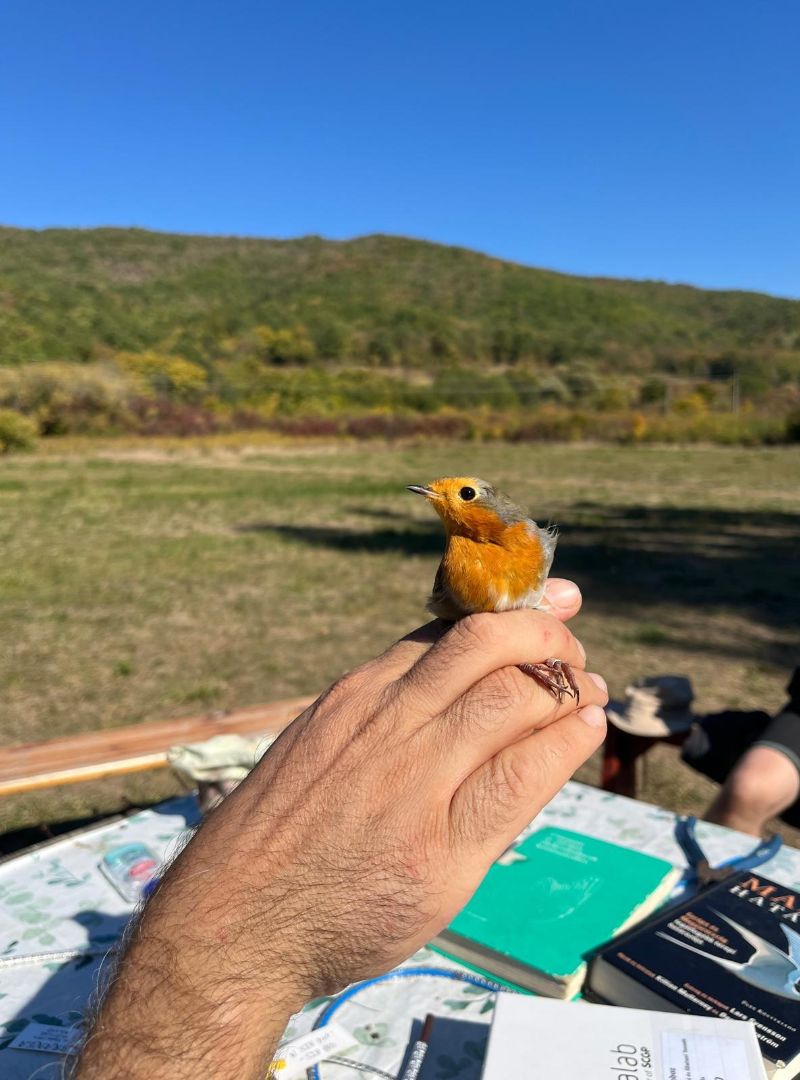
Robin, the most common bird in the bird ringing camp
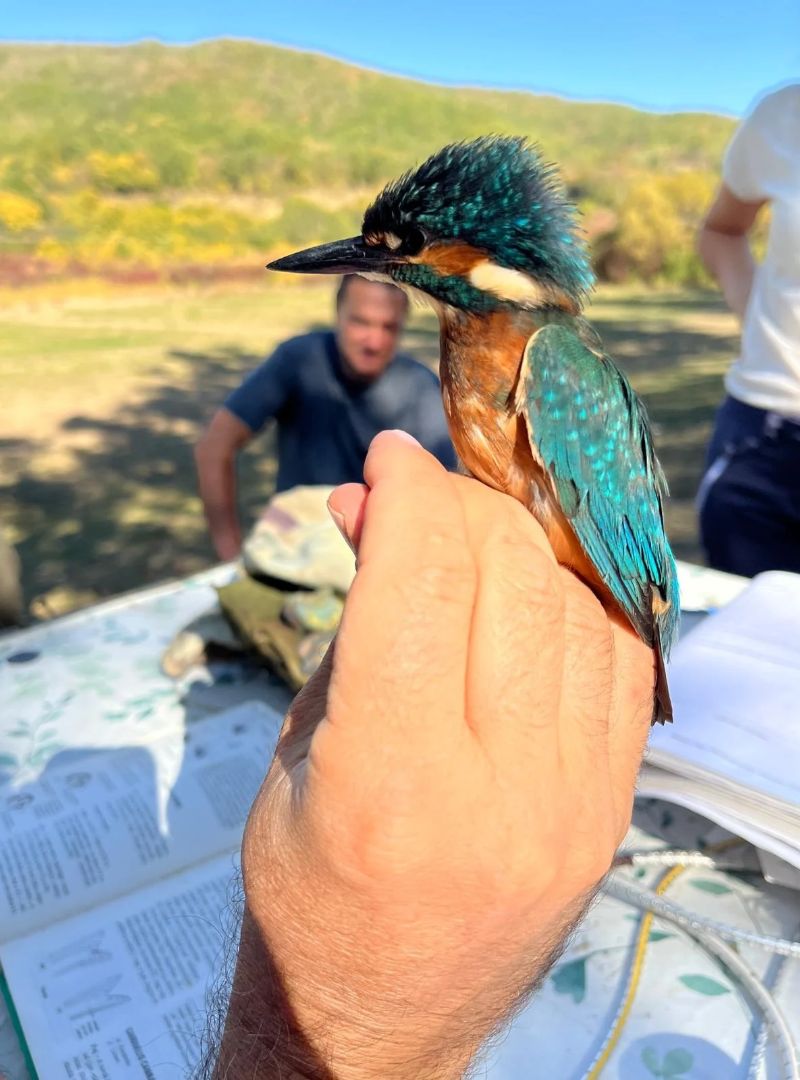
Kingfisher
I learned so much about birds. I learned about their migration behavior, some Latin names, differences between bird species, and all their special skills. For example, the Woodpecker uses its really long tongue to get insects out of tree trunks. The Treecreeper climbs trees and hides in the bark. And there are so many more interesting birds with special skills!
I was really grateful about all the open and enthusiastic people I met at the bird camp. Everyone was willing to teach me new stuff and was very patient with me when trying to take the birds out of the nets. I was always really impressed with how much sensitivity and care everyone treated the birds, even if they got really stuck in the nets.
It was the first time for me to get so near to birds and hold them. It was a completely different experience than seeing birds flying around. This feeling of holding a bird was really intense for me, and so was having the responsibility for such a small living creature. I was always relieved to see them fly away at the end.
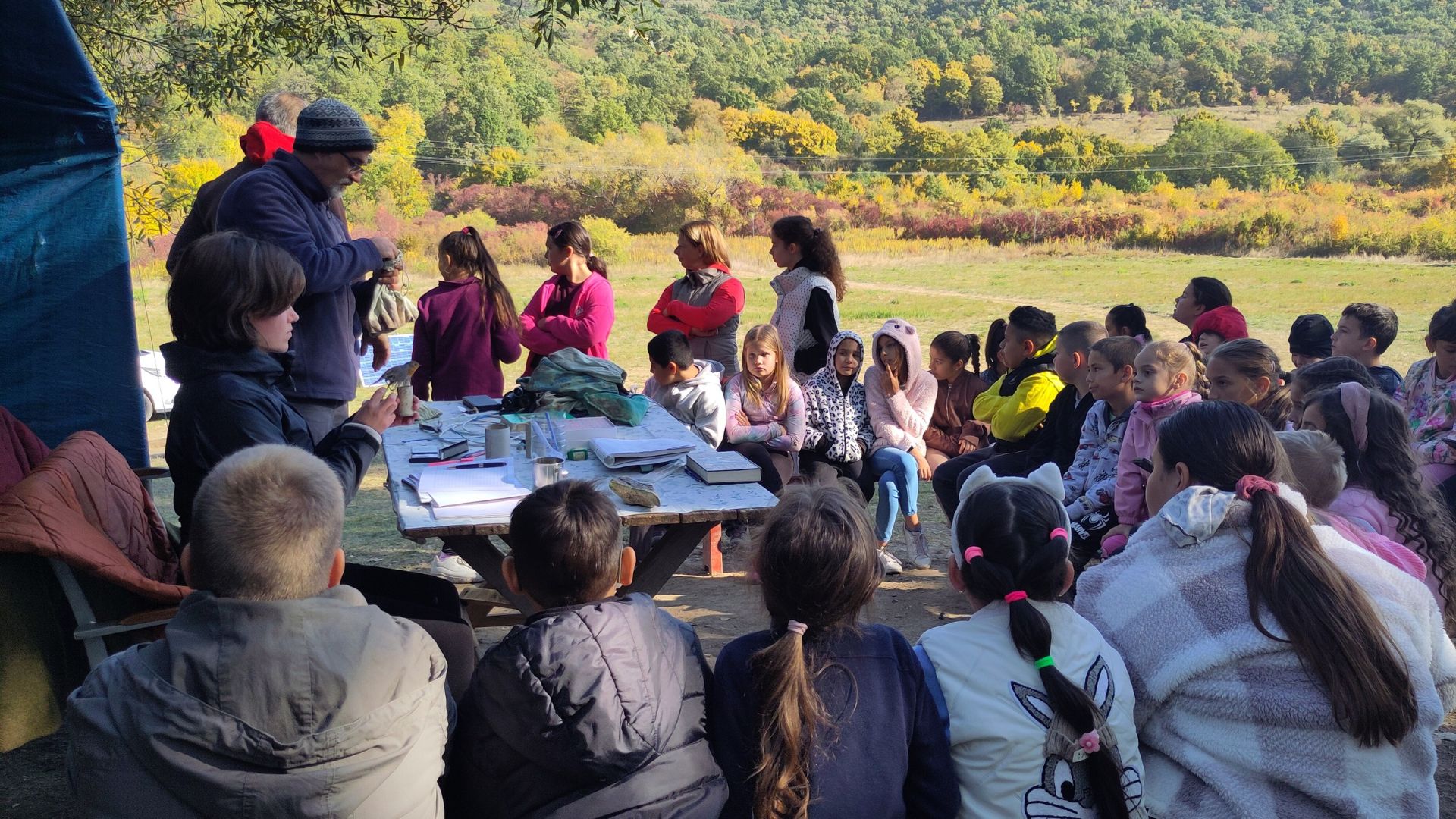
School class visiting and watching the bird ringing
This is Lina’s perspective incoming
I joined Carlotta a little later. After spending some time in Budapest, going to the Bird Camp was such a contrast. But I really needed it. Beforehand, Carlotta told me about the cold at night, which I couldn’t really imagine because it was so warm during the day. I had some warmer clothes with me. However, I learned quickly that she was very right.
So, here we go: the first night, and then the alarm ringing at 5:45:
I am jumping in front of the hill to get warm, before we go on our first round of getting the birds from their nets and putting them into bags to be able to ring them. With 4 layers of clothes on my body, I start my first round of the day. We have to hurry, as most of the birds fly early in the morning. Robins everywhere. Tits everywhere. My hands are getting cold from writing numbers and holding bags filled with birds. Luckily, they get free again after some minutes.
However, as this journey continues, I am wondering: What is this actually for? In the end, some species are dying and get hurt for different reasons when they are tied to the net… That’s why as a social scientist and caring human being, this is the question I always ask. And good for us: there are indeed a lot of very nice Hungarian people who are willing to teach us a lot about the birds, the surrounding nature, and its importance. This is not only good for us, but every day groups of children come to get an impression of the work and get closer and more familiar with the birds. This aspect of environmental education can be very helpful to show the importance of the protection of these species and their environment. As probably most of us know, the birds' routes are changing, species are becoming extinct, and the dryness makes it ever more difficult to cope with the changes of the crisis we are living in. A crisis humans are responsible for. So, to demonstrate some responsibility and take action is always a necessary and good step.
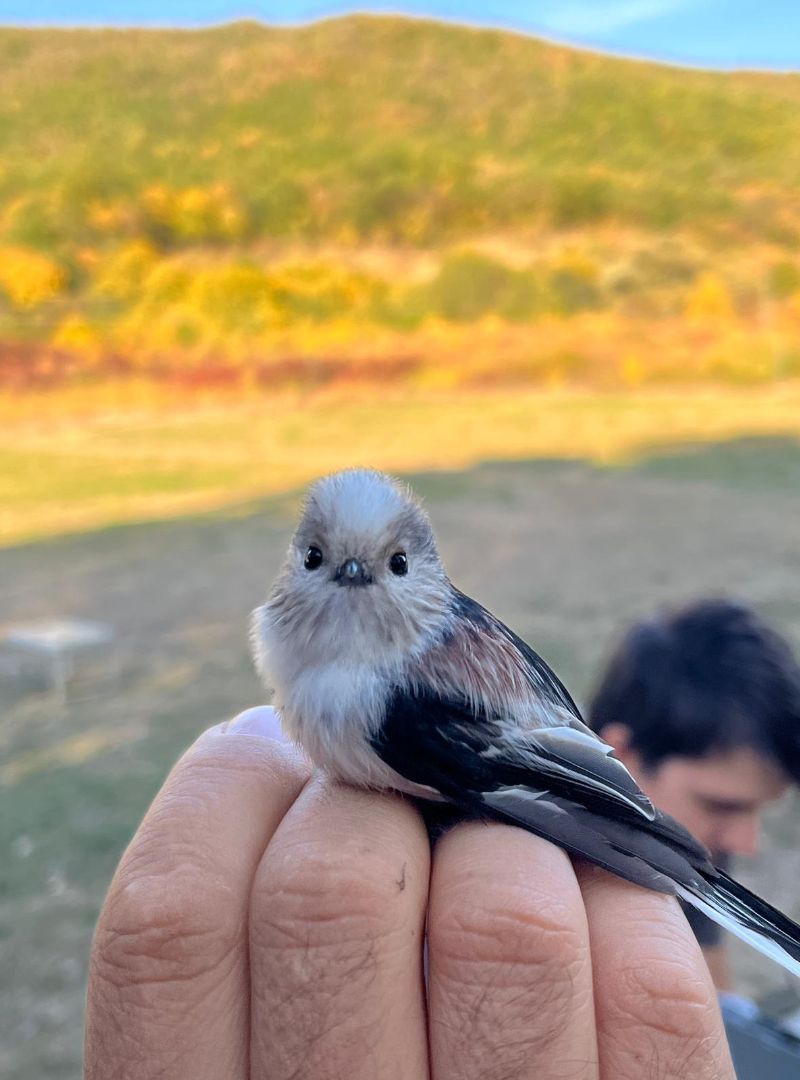
Long-Tailed Tit
I learned so much about the birds – my new favorite birds are the tree creeper and the long-tailed tit (you should look them up) – that I feel like now I have a better sensibility of these birds in my daily life. My perspective changed a bit about what I actually sense when I look at the trees. Not only seeing the trees that I love so much, but also the spotted woodpecker that is part of this little ecosystem. After all, I am super grateful for this experience, and I see the value in the bird ringing camp. But I also want to end this on a more critical note: why are we doing this, and who does it benefit? And this is not only a question of the bird ringing, but a bigger one that I will carry with me for the rest of this time here.
Thank you to everyone who came and taught us so much about the beings that live with us! And the people (and birds?) who trusted us. It was a really unique experience, and I can proudly say now that I know how to hold a bird and free it from a net. Of course, there is so much more to learn.
Greetings from Miskolc,
Lina and Carlotta