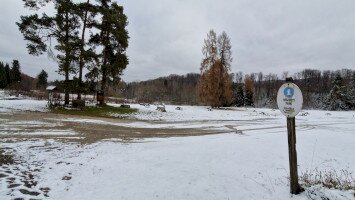
In 2017, at the initiative of four settlements – Borsodnádasd, Felsőtárkány, Répáshuta, and Szomolya – and under the coordination of the Bükk National Park Directorate, the Bükk Region Geopark was established, covering an area of 2,817 square kilometers. It encompasses one of the most complex geological formations in the country, including the Uppony Mountains and the Bükk Mountains. The Bükk Region Geopark is located across two counties – Heves and Borsod-Abaúj-Zemplén – and includes 109 settlements. By receiving the UNESCO Global Geopark designation, the Bükk Region Geopark officially became part of the international geopark network in 2024, recognizing the region's unique geodiversity.
.png "BVG_long_angol_vagott (1).png")
The goals of the Bükk Region UNESCO Global Geopark:
- the protection of geodiversity,
- the presentation of geological heritage,
- fostering an awareness focused on values and sustainability, with particular emphasis on raising local residents' consciousness of the value and significance of geological heritage
- in addition to the attraction of geological values, to promote the region's development through sustainable geotourism by relying on ecological, archaeological, ethnographic, historical, cultural, and gastronomic values.
The Bükk Region Geopark covers one of the most complex geological areas of the country, including the folded, thrust, and nappe-structured Uppony Mountains and the Bükk Mountains. In the Uppony Mountains, the oldest rocks are exposed, dating back to the geological Paleozoic era, specifically the late Ordovician period. The basement rocks of the Bükk Mountains were formed through an almost continuous sedimentary process lasting nearly 150 million years. Internationally significant is the geological outcrop on the northern side of Bálvány, which demonstrates the Permian-Triassic boundary and records the mass extinction event at the end of the Permian. The Bükk Mountains are Hungary's richest karst region in terms of caves, with over 1,150 caves hidden underground, many of which have outstanding archaeological and paleontological importance. In addition to karst formations, volcanic rocks also appear at the foot of the Bükk Mountains, preserving a record of violent volcanic eruptions from the Miocene epoch.
What are UNESCO Global Geoparks?
UNESCO Global Geoparks are single, unified geographical areas where sites and landscapes of international geological significance are managed with a holistic concept of protection, education and sustainable development. Their bottom-up approach of combining conservation with sustainable development while involving local communities is becoming increasingly popular. A UNESCO Global Geoparks is an international designation that promotes a balance between man and nature and belong to the International Geoscience and Geoparks Programme (IGGP).
European Geoparks Network
The European Geoparks Network (EGN) was established in 2000 by four pioneer geoparks and has been under the auspices of UNESCO since 2001. It is a very active network that brings together all the UNESCO Global Geoparks in Europe.
Global Network of Geoparks
The GGN was initially founded in 2004 as an international partnership developed under the umbrella of UNESCO. It serves to develop models of best practice and set quality standards for territories that integrate the protection and preservation of Earth heritage sites within a strategy for regional sustainable economic development. Bükk Region Geopark has been a member of the European and Global Network of Geoparks and has held the title of Bükk Region UNESCO Global Geopark since March 2024.